What Fast Fashion Actually Costs You (And It's Not Just Money)
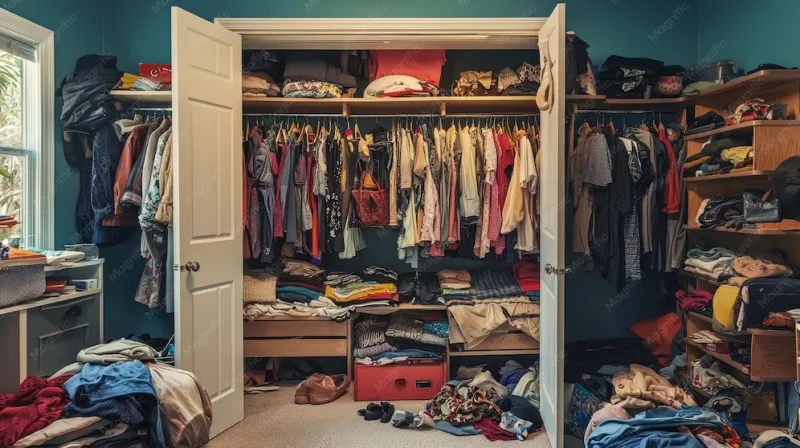
Photo: overflowing closet with clothes piled up minimalist contrast, via img.freepik.com
There's a particular kind of satisfaction that comes from scoring something cheap. A $15 top, a $22 pair of pants, a $9 accessory that you didn't need but couldn't leave behind. The dopamine hit is real. The savings, though? A lot less real than they seem.
Fast fashion has built an entire economy around the illusion of value. And for a long time, it worked. But the numbers — when you actually sit down with them — tell a different story. One that has less to do with your bank account and more to do with your time, your headspace, and the quiet weight of owning more than you can manage.
The Average American Closet Is a Financial Sinkhole
Let's start with some context. The average American buys around 68 garments per year, according to data from the American Apparel & Footwear Association. That's more than one new piece per week. Meanwhile, studies suggest that most people wear only about 20% of what's actually hanging in their closet on a regular basis.
Do that math. If you're spending, say, $1,800 a year on clothing — which is well within the national average — and only actively using a fifth of it, you're effectively burning $1,440 annually on stuff that just sits there. That's not a wardrobe. That's a storage problem with a price tag.
Fast fashion thrives on this cycle. Low prices make it easy to justify impulse buys. Trend cycles move fast enough that items feel outdated within months. And the whole system is engineered to keep you coming back, not to keep you satisfied.
Time Is the Hidden Tax Nobody Talks About
Here's the cost that never shows up on a receipt: your time.
Think about how many hours you spend browsing online, scrolling through sale tabs, standing in fitting rooms, and returning things that didn't quite work. A 2023 survey by Statista found that American consumers spend an average of over five hours per week shopping — and a significant portion of that is online browsing that doesn't even result in a purchase.
Then there's the time spent managing the aftermath. Doing laundry for a closet full of clothes you rotate through inefficiently. Reorganizing a drawer that keeps getting out of hand. Staring at a packed wardrobe and still feeling like you have nothing to wear. These are real time costs, and they compound quietly in the background of your life.
When you buy less — but buy intentionally — that overhead shrinks. A smaller, more deliberate wardrobe is faster to navigate, easier to maintain, and takes up less mental real estate every single day.
Decision Fatigue Is Draining You Before You Even Leave the House
Psychologists have a name for what happens when you're forced to make too many choices: decision fatigue. And your closet might be one of the biggest contributors to it.
Research from Columbia University found that people make worse decisions as the day goes on — not because they get lazy, but because the mental energy required for choosing depletes over time. Every trivial decision you make in the morning chips away at the cognitive resources you need later.
A closet stuffed with options sounds like freedom. In practice, it's friction. When everything is a possibility, nothing is an obvious choice. You spend energy you don't have on a problem that shouldn't exist.
Contrast that with a curated wardrobe of pieces that genuinely work together. Getting dressed becomes automatic. The decision is already made. You walk out the door with mental bandwidth intact — which, if you've got a full workday ahead, is worth more than any bargain you scored at checkout.
The Psychological Weight of Excess
There's also something harder to quantify but easy to feel: the low-level stress of too much stuff.
Research out of UCLA's Center on Everyday Lives of Families found a direct correlation between the density of household objects and elevated cortisol levels — the stress hormone — particularly in women. Clutter isn't neutral. It signals unfinished business to your brain. It creates background noise that never fully goes away.
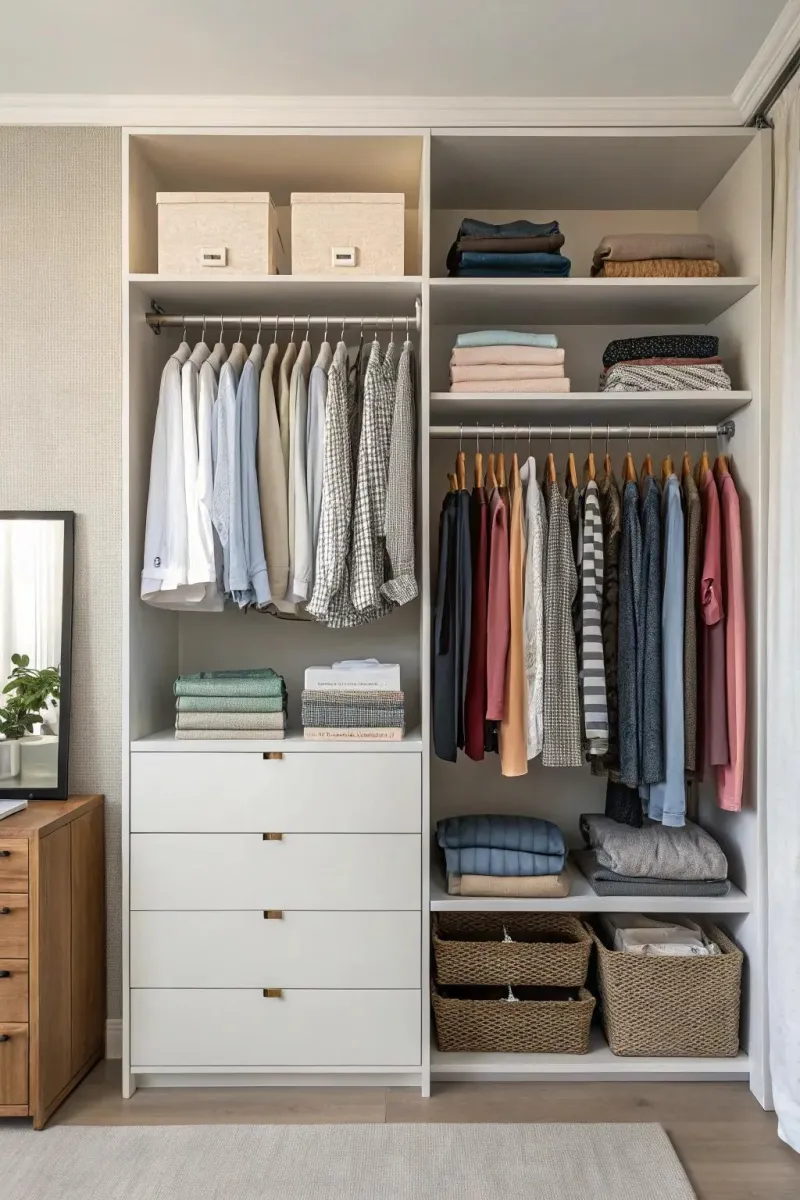
Your closet is part of your home environment. A chaotic one, full of things you bought impulsively and never quite loved, contributes to that ambient stress. A streamlined one — where everything earns its place — does the opposite.
This isn't about aesthetics for aesthetics' sake. It's about the actual, measurable quality of your daily experience.
Buying Less Is a Financial Strategy, Not a Sacrifice
Here's where the math gets interesting. When people shift from volume-based shopping to intentional purchasing, their overall clothing spend typically drops — even when they're buying more expensive individual pieces.
That's because quality items last longer, get worn more often, and don't need to be replaced as frequently. A $120 shirt you wear 80 times has a cost-per-wear of $1.50. A $20 shirt you wear six times before it pills and fades costs you $3.33 per wear — more than double. Frequency of use is the metric that actually matters, and cheap items almost never win that calculation.
Beyond the numbers, intentional buying changes your relationship with what you own. When you've thought carefully about a purchase — when it fits well, works with what you already have, and reflects how you actually want to show up — you take care of it differently. You wear it more. You keep it longer. The whole cycle slows down.
What Wearing Less Actually Means
At OSO, the idea behind wear less, mean more isn't about deprivation. It's about intentionality. About choosing things that pull their weight — in your closet, in your life, and on your actual body.
Fast fashion sells you the feeling of abundance. But abundance and value are not the same thing. A closet full of things you half-love is not richer than a smaller collection of things you reach for constantly.
The real cost of convenience isn't just environmental (though it is that too). It's personal. It's the hours you don't get back, the decisions that drain you before noon, and the low hum of stress that comes from owning more than you can meaningfully use.
The alternative isn't complicated. Buy less. Choose better. Wear what you actually love. It turns out that's not just a philosophy — it's a genuinely smarter financial move.