Minimalism Lied to You: The Real Problem with Chasing the Perfect Wardrobe
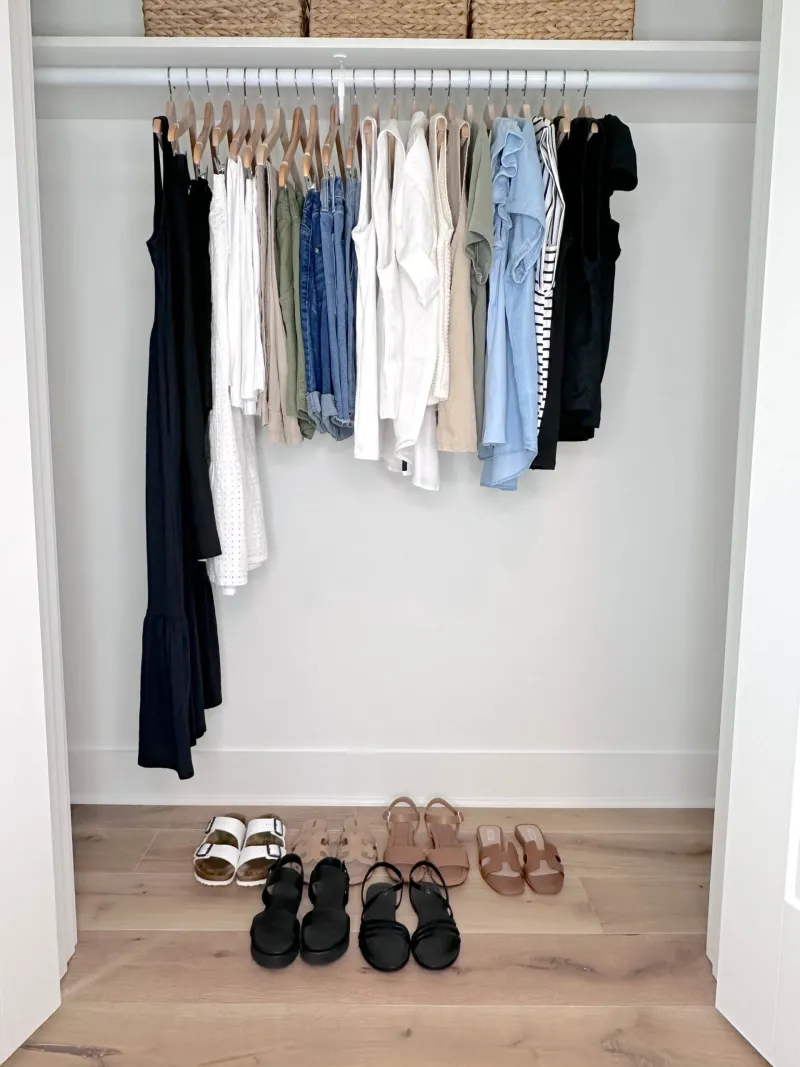
Photo: minimalist open closet with few hanging neutral clothing items, via casolia.com
There's a certain irony in opening a new browser tab to research how to own less stuff. You've probably done it. Maybe you've even added a few "essential" pieces to your cart in the process — a camel coat here, a pair of straight-leg trousers there — all in the name of simplifying your life. Welcome to the capsule wardrobe paradox, where the pursuit of minimalism quietly becomes its own form of excess.
The concept itself isn't broken. Owning fewer, better things is genuinely a sound philosophy. But somewhere between Susie Faux coining the term in the '70s and the modern internet turning it into a content genre, the capsule wardrobe stopped being a personal framework and became a product category. And that shift has made a lot of people's closets — and lives — more complicated, not less.
The Formula Was Never Meant for You
Every capsule wardrobe guide you've ever read comes with a list. Twelve pieces. Or thirty. Or fifteen "timeless staples" that allegedly work for every body, every lifestyle, every climate. A white button-down. A trench coat. Dark-wash jeans. Neutral sneakers.
Here's the thing nobody says out loud: that list was written for a fictional person.
If you're a teacher in Phoenix who runs on weekends and has two kids, your version of "essential" looks nothing like a remote-working creative in Brooklyn or a nurse in rural Ohio who needs clothes that can handle a 12-hour shift and still feel human afterward. The formula doesn't account for your actual life — it accounts for an aspirational version of it. And chasing that version means you keep buying pieces that feel right in theory and sit unworn in practice.
Body type matters here too, and it's rarely discussed honestly. The "perfect white tee" that photographs beautifully on one frame might require a completely different cut, weight, or silhouette to feel right on another. When the formula fails you physically, the natural response is to buy more — more options, more attempts — which is exactly the opposite of what minimalism promised.
When Less Becomes More (Shopping)
Consider the math. You decide to build a capsule wardrobe. You watch a few YouTube videos, read a few guides, and come away with a list of 20 "must-haves." You already own maybe 8 of them. So you need 12 more. Those 12 pieces — bought thoughtfully, at a reasonable quality level — represent a real investment. And then the season changes, and you realize the list didn't account for summer, or for your cousin's wedding, or for the fact that you actually hate linen no matter how many influencers tell you it's the fabric of enlightened people.
So you buy more. And now you have more than you started with, plus a mild sense of guilt that you're somehow doing minimalism wrong.
This is the trap. The capsule wardrobe, as it's been marketed, creates a finish line that keeps moving. There's always one more "foundational piece" you need before the system clicks into place. It monetizes the idea of owning less, which is a genuinely impressive trick.
Intention Over Inventory
What actually works — and what the original spirit of the capsule wardrobe was really about — is intention. Not a list of items, but a set of values applied to what you already own and what you choose to bring into your life going forward.
Ask yourself what you actually do in a given week. Not what you wish you did, not what your lifestyle looked like three years ago. What does Tuesday actually look like? What about Saturday morning? If your honest answer is "I work from home, go to the gym, and occasionally go out to dinner," then your wardrobe should reflect that — not the version where you're casually strolling through a European city in a perfectly tailored trench.
Intention also means letting go of the idea that your wardrobe needs to be photogenic. Some of the most functional, satisfying closets in the world are full of things that would look boring in a flat lay. They work because every single piece gets worn, fits well, and earns its space.
The Budget Reality Nobody Talks About
Capsule wardrobe content skews heavily toward investment pieces — and look, quality matters. But the implicit message that you need to spend $200 on a t-shirt to do this right is classist in a way that rarely gets called out. A wardrobe built with intention at any price point beats a curated collection of expensive pieces you're afraid to actually wear.
If your budget means shopping secondhand, shopping fast fashion strategically, or holding onto older pieces that still fit and function well — that's not a compromise. That's the whole point. The goal was never to own a certain brand or hit a certain price threshold. It was to wear what genuinely serves you and stop letting the rest take up physical and mental space.
What OSO Actually Believes
We build pieces at OSO that are meant to be worn, not preserved. Things that move with your life rather than waiting for the right occasion. But we'd be doing you a disservice if we told you that buying our stuff is the answer to your wardrobe overwhelm. It isn't. The answer is figuring out what your life actually looks like and dressing for that version — not the aspirational one, not the formula version, yours.
Wear less. Mean more. That's not a shopping instruction. It's a mindset. And it starts with letting go of the idea that there's a perfect collection out there waiting to fix everything — and recognizing that the wardrobe you need is probably closer than you think.