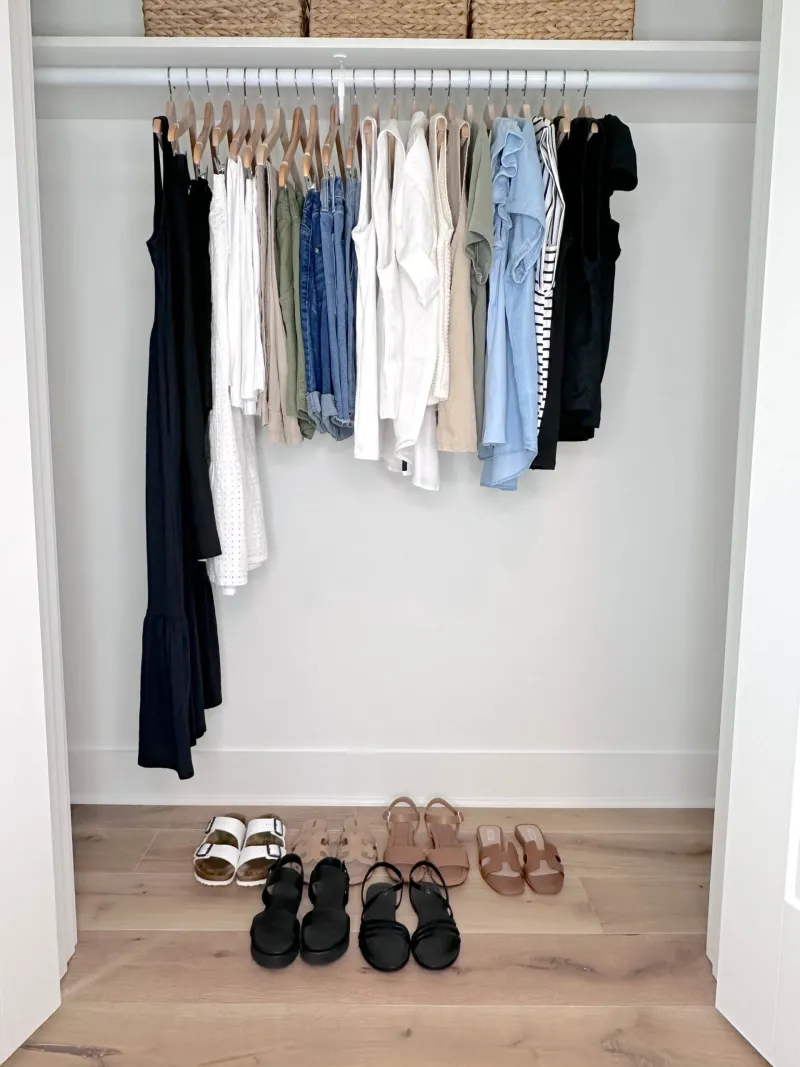
Dress Like You've Already Won the Room
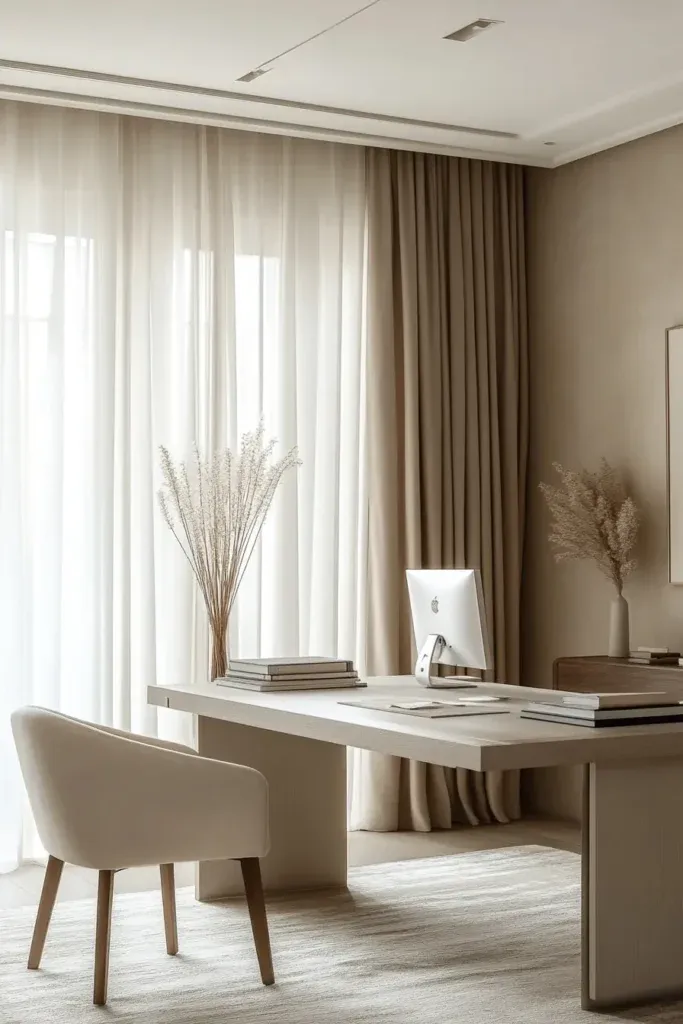
Photo: professional minimal wardrobe clean neutral tones workspace, via recipestime.com
You've heard the advice before: dress for the job you want, not the job you have. It's been repeated so many times it's almost lost its meaning. But strip away the cliché and there's something genuinely useful underneath — because the relationship between what you wear and how you perform at work is more concrete than most people realize.
This isn't about power suits or dressing to intimidate. It's about something quieter and more practical: building a workwear approach that removes friction, projects consistency, and lets you show up as the most capable version of yourself — without spending an extra hour in front of your closet every morning.
The Psychology Behind Professional Dressing
In 2012, researchers at Northwestern University introduced a concept they called enclothed cognition — the idea that clothing doesn't just change how others perceive us, but how we perceive ourselves. Participants who wore a lab coat described as a doctor's coat performed significantly better on attention-related tasks than those who wore the same coat described as a painter's smock. Same garment. Different meaning. Different results.
The takeaway isn't that you need to dress formally. It's that intentional dressing — clothing chosen with purpose — activates a different mental state than throwing on whatever was clean. When you dress with intention, you signal to your own brain that you're prepared, competent, and ready.
For anyone navigating a professional environment, that internal shift matters. A lot.
Morning Friction Is Costing You More Than You Think
Let's be honest about what a chaotic closet actually does to your workday. It doesn't just slow you down — it starts your day in a state of low-grade stress and decision fatigue before you've even had coffee.
Psychologists note that willpower and decision-making capacity are finite resources that deplete with use. Every choice you make in the morning — including the micro-decisions involved in building an outfit from a disorganized wardrobe — chips away at the cognitive energy you need for the things that actually matter at work.
This is why so many high-performing professionals are deliberate about simplifying their workwear. Barack Obama famously limited his wardrobe to gray and blue suits to eliminate decision fatigue. Steve Jobs wore the same black turtleneck on repeat. These aren't just quirks — they're efficiency strategies.
You don't need to go full uniform. But the principle holds: a curated wardrobe of pieces that work together effortlessly means you're not burning mental energy on outfit logistics. You walk out the door clear-headed. That's a competitive advantage.
Building Your Professional Core: Quality Over Quantity
The goal isn't a full closet — it's a functional one. Here's how to think about it.
Start with your actual week. Before buying anything, map out what your workweek genuinely looks like. Are you mostly in meetings? Working remotely with occasional in-person appearances? On-site in a creative or casual environment? Your wardrobe should be built around your real life, not a hypothetical version of it.
Invest in the pieces that do the heavy lifting. For most professionals, that means two to three well-fitting trousers or tailored pants, a handful of quality tops in neutral or muted tones, one or two layering pieces, and footwear that reads polished without requiring a second thought. These are your workhorses — the items you reach for constantly because they always work.
Let your palette do the coordination. One of the most underrated advantages of a minimal wardrobe is that a consistent color palette makes everything mix-and-match by default. When your neutrals align, getting dressed becomes less about matching and more about choosing. That's the kind of simplicity that saves you fifteen minutes every morning.
Fit is non-negotiable. A well-fitting $80 shirt reads more professional than an ill-fitting $300 one. Before price, before brand, before color — fit is the variable that determines whether clothing communicates competence or undermines it. Get basics tailored if needed. It's worth it every time.
The Signature Style Advantage
There's a subtler benefit to a streamlined, intentional workwear approach: you become recognizable.
In professional environments, consistency is a form of personal branding. When you show up with a coherent, reliable aesthetic — not trendy, not chaotic, but distinctly you — people remember it. You become associated with a certain kind of presence. That's not a small thing.
Contrast that with the professional who's always experimenting, whose wardrobe reads as inconsistent or trend-chasing. Neither is inherently wrong, but one signals groundedness and self-awareness. The other can inadvertently communicate indecision.
A signature style doesn't mean boring. It means edited. It means you've made choices and you stand behind them — and that confidence, subtle as it is, reads clearly to the people around you.
Dressing for High-Stakes Moments
Even in casual work environments, there are moments that call for a deliberate upgrade: a big presentation, a client meeting, a performance review, a job interview. These are the moments where what you wear is doing real work on your behalf.
The research on this is consistent. A 2015 study published in the Journal of Experimental Psychology found that formal clothing increased abstract thinking and gave people a greater sense of power and control. In high-stakes situations, dressing up — even slightly relative to your baseline — can shift your mental posture in ways that improve performance.
This doesn't mean overdressing. It means being intentional about the signal you're sending, both to yourself and to the room. For a big pitch, maybe that's your sharpest blazer over a clean, simple base. For a client dinner, maybe it's swapping your usual casual layer for something more considered. Small shifts. Real impact.
Less Is a Professional Strategy
At its core, intentional workwear is about removing noise. It's about building a closet where the decisions are already made — where everything fits, works together, and reflects how you want to show up — so your energy goes into the work, not the wardrobe.
Wear less. Mean more. That's not just a brand idea. In a professional context, it's genuinely good advice. The person who walks in with a focused, consistent presence — who looks like they made a choice and committed to it — often reads more confidently than the person who walked in wearing everything at once.
Your wardrobe is an extension of how you operate. Make it deliberate. Make it efficient. And then let it get out of the way so you can actually do the work.