One Outfit to Rule Them All: The Case for Wearing the Same Thing Every Day

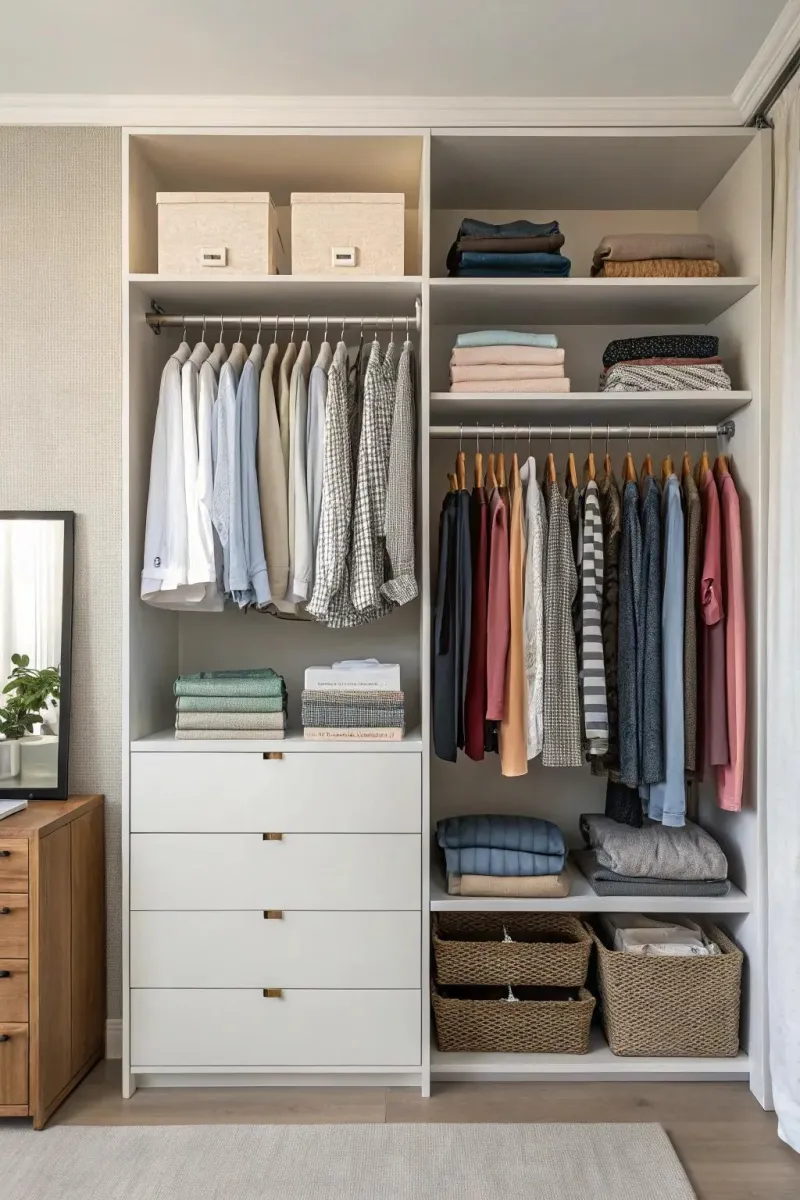
Photo: minimalist wardrobe flat lay neutral tones organized closet, via i.pinimg.com
There's a moment every morning that most people treat as completely routine: standing in front of a closet, scanning through options, pulling things out, putting them back, second-guessing, settling. It takes anywhere from five minutes to half an hour, and by the time it's over, you've already spent real mental energy on something that, by most accounts, doesn't matter that much.
Now imagine reclaiming that energy every single day.
That's the quiet logic behind the personal uniform—and it's why a surprising number of high-functioning creatives, founders, and professionals have quietly stopped thinking about what to wear.
Decision Fatigue Is Real, and Your Closet Is Part of the Problem
Psychologists have been studying decision fatigue for decades. The basic finding: every choice you make draws from the same limited cognitive reservoir. Make too many small decisions early in the day, and your capacity for bigger, more important ones starts to erode.
Barack Obama famously wore only gray or blue suits during his presidency. His reasoning was direct—he had too many other decisions to make. Mark Zuckerberg's rotation of gray tees became something of a cultural punchline, but his explanation was earnest: eliminating trivial choices preserves mental bandwidth for the work that actually matters.
This isn't a Silicon Valley quirk or a celebrity affectation. It's a practical application of cognitive science. When you reduce the number of decisions your brain has to process before 9 a.m., you arrive at your day sharper, less depleted, and more prepared to think clearly.
Your wardrobe is a decision engine. The question is whether it's working for you or against you.
What a Uniform Actually Looks Like
Here's where people get it wrong: a personal uniform doesn't mean wearing the exact same shirt in seven identical copies (though some people do, and honestly, respect). It means building a consistent framework—a signature aesthetic—so that any combination you reach for works without effort.
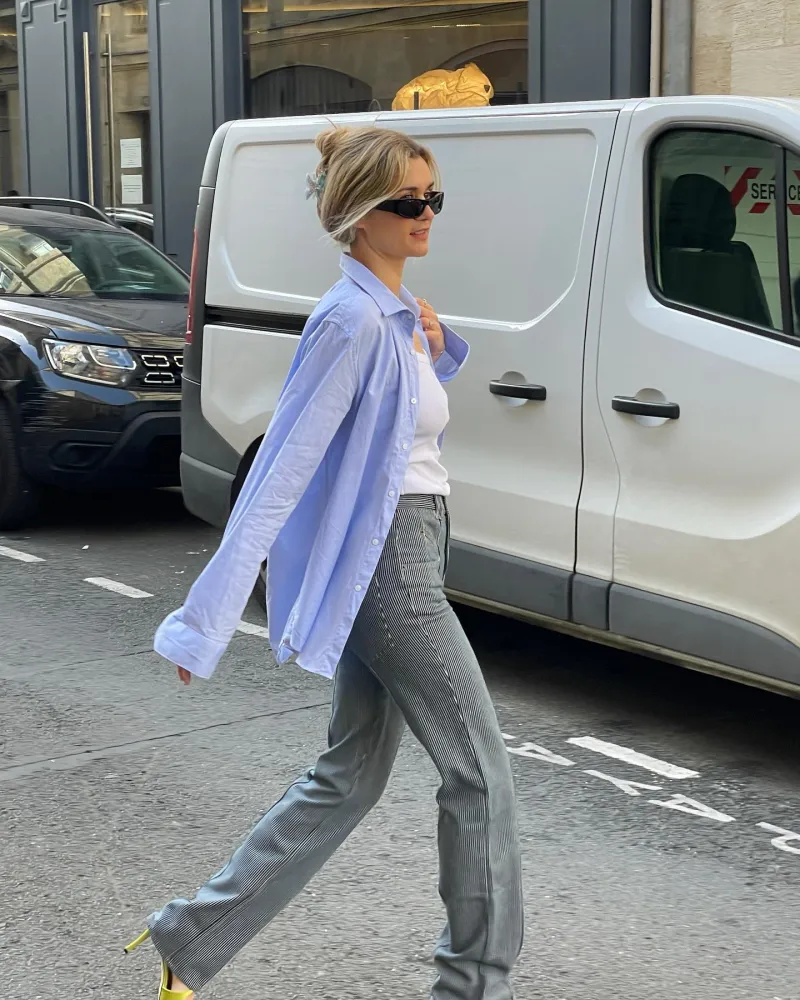
Think of it less like a costume and more like a visual language you've developed for yourself. A photographer in Brooklyn might live in slim dark trousers, a white or cream top, and a structured jacket. A product designer in Austin might rotate between clean chinos, minimal tees, and one reliable sneaker. The pieces change slightly. The overall impression stays coherent.
The uniform isn't about sameness. It's about intentionality so deeply baked in that it becomes effortless.
The Creative Paradox: Constraints Unlock Freedom
It sounds counterintuitive, but limiting your options often produces better outcomes than having unlimited ones. This is well-documented in design and art—constraints force creativity rather than suppress it.
The same principle applies to style. When you've decided, in advance, what your visual identity looks like, you stop starting from zero every morning. You're not choosing. You're executing. And that mental shift has a compounding effect: you feel more confident in what you're wearing because you chose it deliberately, not reactively.
Chefs, architects, writers, and musicians who are known for personal style—think Anna Wintour's bob and sunglasses, or Johnny Cash's all-black everything—aren't wearing a uniform because they gave up on fashion. They're wearing one because they figured out what works and decided to stop questioning it.
That's not boring. That's mastery.
How to Build Your Own Without Going Full Monochrome
Designing a personal uniform doesn't require a dramatic wardrobe purge or a complete aesthetic overhaul. It starts with observation.
Step one: Notice what you actually reach for. Most people have a handful of pieces they gravitate toward instinctively. Those items—the ones that feel right without explanation—are your data. They're telling you something about your natural preferences, your body, your lifestyle.
Step two: Identify the through-line. Is it color? Fit? Fabric weight? A specific silhouette? Whatever connects your most-worn pieces is the foundation of your uniform. Build from that, not from what you think you should be wearing.
Step three: Narrow your palette. A two-to-three color story makes everything easier. Neutrals anchor the look; one or two accent colors add depth without chaos. When everything coordinates, you can reach blindly into your closet and still walk out looking intentional.
Step four: Invest in the repeatable pieces. A uniform is only as good as its components. This is where quality matters more than quantity. If you're going to wear the same style of trouser four days a week, it needs to hold up—in construction, in fit, in how it looks after a hundred washes.
Step five: Leave room for expression. A uniform isn't a prison sentence. A watch, a bag, a single statement piece—these details let personality breathe without derailing the whole system. The framework gives you structure; the details give you range.
The Quiet Confidence of Knowing What You're About
There's something else that happens when you stop treating your wardrobe as a daily puzzle: you start projecting a different kind of presence. People who consistently look like themselves—not like they're trying on identities or chasing trends—tend to read as grounded. Decisive. Like they've got more important things to think about.
That perception isn't superficial. It's actually accurate. Because they do.
Wear less. Mean more. The uniform is just the most honest version of that idea—stripping away the noise until what's left is exactly you, on purpose, every single time.