Thirty Pieces, Infinite Outfits: The Case for Owning Less and Wearing Better
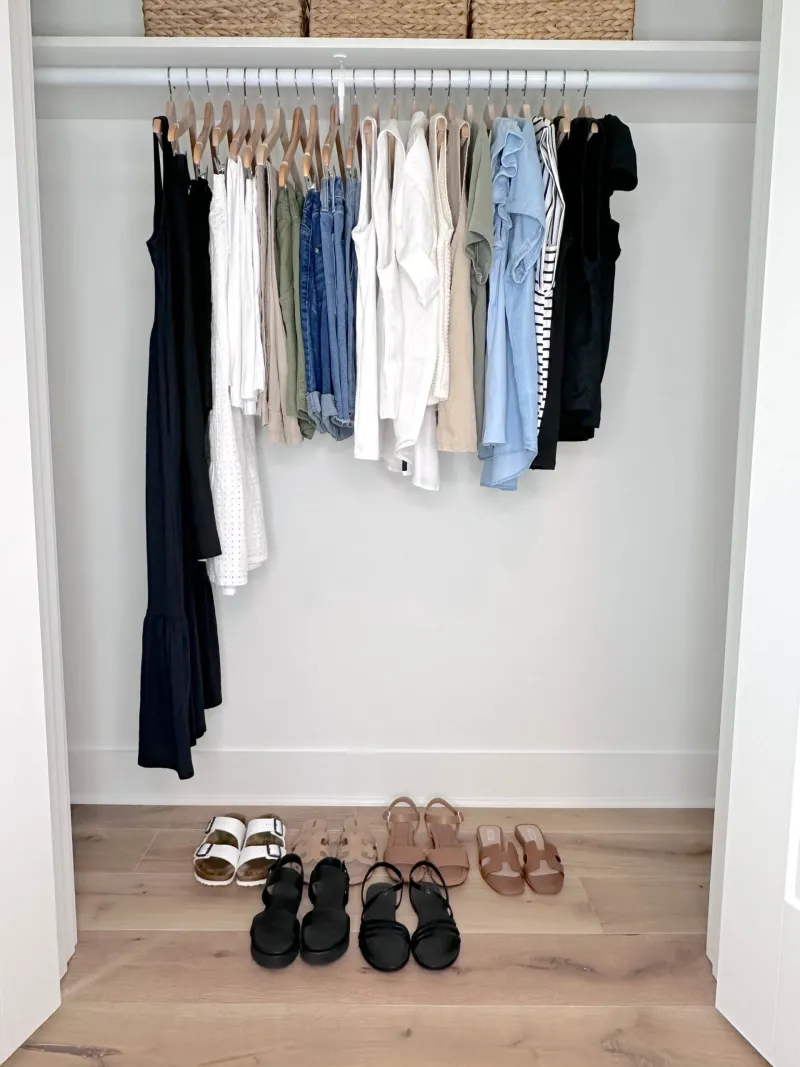
Photo: minimalist capsule wardrobe neutral clothing laid flat organized closet, via i.pinimg.com
Here's a scenario most of us know too well: you're standing in front of a stuffed closet, hangers packed so tight you can barely slide them apart, and somehow — somehow — you have nothing to wear. The tags are still on half of it. There's a dress you bought for a wedding two years ago. Three nearly identical gray hoodies. A blazer that's been waiting for the right occasion since 2019.
This is the paradox of the overstuffed wardrobe. More clothes, less clarity.
The capsule wardrobe concept isn't new — it dates back to the 1970s when London boutique owner Susie Faux coined the term — but it's never felt more relevant than right now. In a culture finally starting to push back against the relentless churn of fast fashion, the idea of curating a small, intentional collection of high-quality pieces is starting to sound less like minimalist asceticism and more like common sense.
At OSO, we built our whole identity around this idea. Wear Less. Mean More. It's not a slogan about deprivation — it's a philosophy about intention.
What a Capsule Wardrobe Actually Is (and Isn't)
Let's clear something up: a capsule wardrobe isn't a uniform. It's not about wearing the same five things on rotation until your friends stage an intervention. It's a curated set of versatile, well-made pieces that genuinely work together — where almost every item can be paired with almost every other item without looking like you tried too hard or not at all.
The classic benchmark is around 30 to 37 pieces for a season, though the number matters less than the principle. What you're going for is a wardrobe with zero dead weight. Every piece earns its spot.
Think of it less like a minimalist exercise and more like editing a playlist. A great playlist doesn't have 800 songs — it has the right ones.
The Foundation: What Actually Goes In
Building a capsule wardrobe starts with a color palette, and neutrals are your best friends here. We're talking whites, creams, blacks, navy, tan, gray, and the occasional earthy olive or warm brown. These tones don't fight each other — they collaborate.
From there, your 30-ish pieces might break down something like this:
Tops (10–12 pieces)
- 2–3 crisp white or off-white tees
- 2 long-sleeve shirts in neutral tones
- 1–2 quality button-downs (chambray or Oxford cloth work year-round)
- 1 lightweight crewneck or mock-neck
- 1–2 fitted tanks or layering pieces
- 1 relaxed linen or cotton shirt for casual days
Bottoms (6–8 pieces)
- 1 pair of dark wash straight-leg jeans
- 1 pair of relaxed or wide-leg trousers in a neutral
- 1 pair of chinos (khaki or olive)
- 1 casual short for warmer months
- 1 midi skirt or tailored trouser if that's your preference
Outerwear and Layers (4–5 pieces)
- 1 clean-lined jacket or blazer
- 1 versatile zip or pullover
- 1 quality coat or heavier jacket for colder weather
- 1 light layer like a cardigan or overshirt
Footwear (4–5 pairs)
- White or neutral sneakers
- Simple leather or leather-look loafers
- Casual sandals
- One boot that bridges casual and dressed-up
Accessories (3–5 pieces)
- A belt that works across multiple outfits
- 1–2 simple bags
- A watch or minimal jewelry
The exact contents will shift based on your lifestyle, climate, and personal taste. Someone working from home in Austin needs a different capsule than someone commuting in Chicago. The framework is the same — the specifics are yours.
Real Outfit Formulas That Actually Work
Here's where the magic happens. With a solid capsule, you're not choosing outfits — you're just reaching in.
The Off-Duty Uniform: White tee + straight-leg jeans + white sneakers + minimal watch. Clean, effortless, done in under two minutes.
The Smart Casual Pivot: Neutral linen shirt (half-tucked) + chinos + loafers. Works for a dinner out, a casual office, or a weekend farmers market.
The Layered Look: Long-sleeve tee + relaxed trousers + overshirt worn open + clean sneakers. Throw on a jacket if the temperature drops.
The Put-Together Casual: Button-down tucked loosely into dark jeans + boots + simple leather bag. Looks intentional without being stiff.
None of these require trend awareness or a fashion degree. They just require the right pieces.
How to Actually Shop for a Capsule (The Criteria That Matter)
The biggest mistake people make when building a capsule wardrobe is shopping the same way they always have — impulsively, based on what's on sale or what looked good on a mannequin — and then wondering why nothing works together.
Before anything goes in your cart, run it through a few quick checks:
Does it work with at least three things you already own? If you can't immediately picture how it fits into your existing rotation, it's probably not a capsule piece.
Is the quality worth the cost-per-wear? A $15 tee you replace every three months is more expensive than a $60 tee that lasts three years. Do the math.
Is it neutral enough to be flexible? That burnt orange cropped jacket might be stunning on its own. But if it only pairs with two things in your wardrobe, it's a costume, not a capsule piece.
Does it fit you right now, not aspirationally? Capsule pieces should fit your body as it is. Clothes that fit well always look better than clothes that almost fit.
The Part Nobody Talks About: What It Does to Your Head
There's a psychological dimension to owning less that doesn't get enough airtime. Decision fatigue is real — researchers have studied how the sheer volume of choices we make daily depletes our mental energy. A cluttered closet isn't just a logistical problem; it's a cognitive one.
When your wardrobe is smaller and more intentional, getting dressed stops being a daily negotiation with yourself. You stop second-guessing. You stop settling. You stop buying things to fill a gap that just opens up again next season.
You also start to develop a clearer sense of your own style — because you've made deliberate choices about what belongs in your life and what doesn't. That clarity tends to bleed into other areas. There's a reason so many people who go through the process of editing their closet describe it as unexpectedly freeing.
Starting Without Burning It Down
You don't have to donate everything on a Sunday afternoon and start from scratch Monday morning. Building a capsule wardrobe is a gradual edit, not a demolition project.
Start by pulling out the pieces you actually reach for — the ones that make you feel like yourself when you put them on. That's your foundation. Then look at what's missing, and fill those gaps intentionally, one piece at a time.
The goal isn't to end up with fewer options. It's to end up with better ones.
Wear less. Mean more. It really is that simple.