The Basics Trap: When Holding On Costs More Than Letting Go
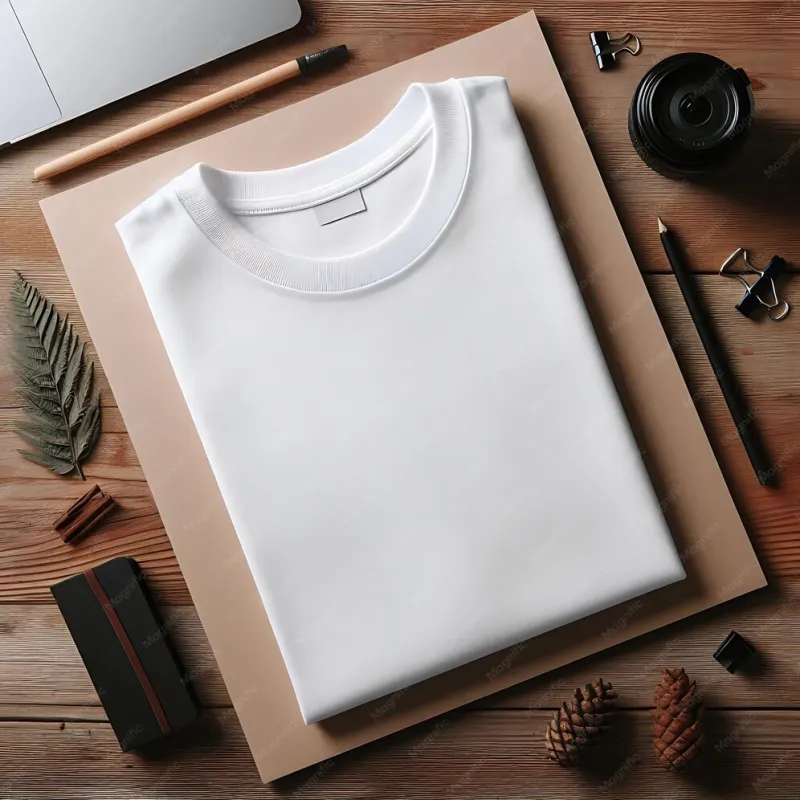
Photo: quality white t-shirt folded neatly on clean surface minimalist lifestyle, via img.freepik.com
Let's talk about the white t-shirt in the back of your drawer. You know the one. It's technically still a shirt. It covers you. It's been washed so many times the fabric has gone from crisp to translucent, the collar has that subtle stretched-out wave, and the color has drifted somewhere between white and "used to be white." But you keep it because getting rid of a basic feels wasteful, and buying a new one feels indulgent.
This is the basics trap. And it's costing you more than you think.
The Minimalism Blind Spot
The minimalist movement did a lot of good things for how Americans think about their closets. It pushed back against overconsumption, made the case for intentionality, and gave people permission to stop chasing a wardrobe that was always one purchase away from complete.
But somewhere along the way, a misunderstanding crept in. "Buy less" got conflated with "keep everything longer, no matter what." Holding on became a virtue in itself, divorced from whether the thing you're holding onto still serves you.
The truth is that minimalism was never about scarcity. It was about value. And a worn-out basic that you avoid wearing, that makes your outfits look unfinished, or that quietly undermines your confidence every time you put it on — that's not a minimalist win. That's just a bad piece of clothing you haven't dealt with yet.
What "False Economy" Actually Means in Your Wardrobe
The concept of false economy is simple: sometimes spending less money now costs you more in the long run. We talk about it with appliances, with tires, with home repairs. We rarely talk about it with clothes, even though it applies just as cleanly.
Here's a practical example. Say you have a pair of chinos that were once a cornerstone of your wardrobe — a great fit, a neutral color, endlessly versatile. Over time, the fabric has thinned at the thighs, the knees have started to bag, and the color has faded unevenly. You keep wearing them because replacing them feels like an unnecessary expense.
But think about what that decision is actually costing you. You're building outfits around a weak anchor. You're compensating with other pieces — a longer jacket to cover the fit, a darker top to draw attention upward. You're spending creative energy managing a problem that a single investment could eliminate. And you're wearing a version of yourself that's slightly off, every single day.
The replacement pair — bought once, bought well — would have paid for itself in all the friction it removes.
How to Know When a Basic Has Actually Expired
Not every worn piece needs to go. Some things get better with age — a well-made denim jacket, a leather belt that's broken in, a linen shirt that softens beautifully after years of washing. The question isn't how old something is. It's whether it still does its job.
A basic has expired when:
It changes how your other clothes look. A stretched collar on a tee affects every layer you put over it. Pilling on a sweater makes a whole outfit look tired. When one piece is dragging the rest down, that's a signal.
You work around it instead of with it. If you find yourself avoiding certain combinations because of how a specific piece behaves — or if you only wear it when nothing else is clean — it's no longer a functional part of your wardrobe.
It no longer fits the way it should. Bodies change. So does fabric. A piece that once fit perfectly and now fits awkwardly isn't serving you, regardless of how much you paid for it or how attached you are.
It makes you feel like a lesser version of yourself. This one's harder to quantify, but it matters. If putting something on makes you feel like you're settling, you probably are.
The Case for Strategic Replacement
Replacing a core basic isn't the same as impulse buying or trend chasing. Done right, it's one of the most intentional moves you can make. You're not adding to your wardrobe — you're maintaining it. The way you'd replace a worn kitchen knife or a dead battery in something that matters.
The key is being deliberate about it. When you identify a basic that's past its useful life, don't replace it in a rush. Take your time. Understand what made the original work — the fit, the weight of the fabric, the color — and find something that matches or improves on those qualities. Buy it once. Buy it well. And then don't think about it again for years.
This is where the "fewer, better" philosophy actually earns its keep. Not in the initial cull, but in the ongoing maintenance of a wardrobe that actually functions.
Wear Less. Mean More.
The goal of a minimal wardrobe isn't to own as few things as possible. It's to make sure everything you own is doing real work. A closet full of degraded basics isn't minimalist — it's just depleted.
Knowing when to invest in a replacement is the same skill as knowing what to buy in the first place. It requires honesty about what's working, clarity about what you actually need, and the willingness to spend money thoughtfully rather than avoiding it altogether.
The white t-shirt in the back of your drawer? You already know the answer. The question is just whether you're ready to act on it.