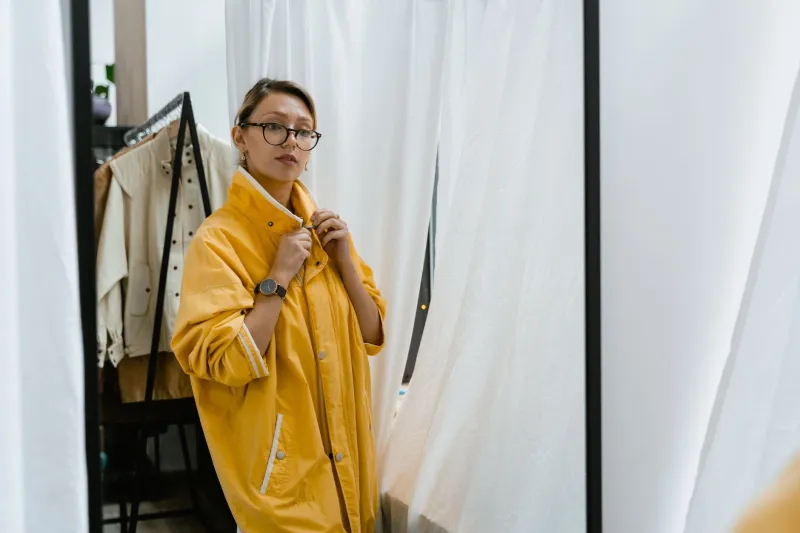
What You Actually Wear Says More Than What You Own
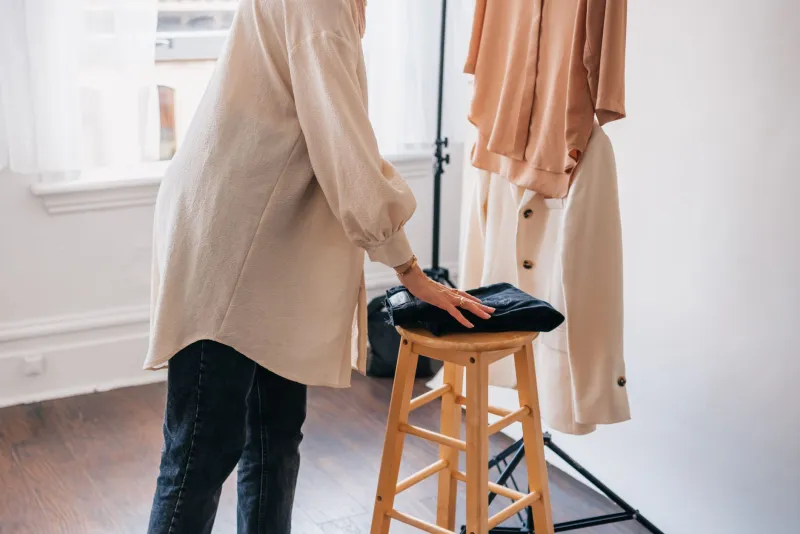
There's a tell in every closet. It's not the statement piece you saved up for, and it's not the blazer still in its dry-cleaning bag. It's the soft gray tee that's been washed so many times the tag has dissolved. The jeans that don't require a decision. The one jacket you've worn to approximately everything for the past three years.
Those are the pieces doing the actual work. And if you pay attention to them — really pay attention — they'll tell you something true about yourself that your Pinterest board never could.
The Gap Between Aspiration and Habit
Most of us dress in two modes without realizing it. There's the wardrobe we build in our heads — curated, intentional, slightly elevated from whatever we wore last Tuesday. And then there's the wardrobe we actually live in, which is smaller, more repetitive, and somehow more honest than anything we'd consciously design.
The gap between those two wardrobes is where a lot of frustration lives. You buy something because it looks incredible on a rack or on someone else, bring it home, and then... don't wear it. Not because you don't like it. Because it doesn't feel like you. Not yet. Maybe not ever.
Psychologists who study consumer behavior call this the "aspiration-action gap" — the distance between what we want to want and what we actually do. In fashion, that gap shows up as a closet full of unworn clothes and a rotating cast of three outfits you trust.
Comfort Isn't a Compromise
Here's the thing the fashion industry doesn't always want you to believe: gravitating toward comfort isn't a failure of taste. It's a signal worth decoding.
When you reach for the same worn-in sweatshirt every Saturday morning, you're not being lazy. You're telling yourself something about what you need from clothing in that moment — ease, familiarity, the absence of friction. When you keep choosing that one particular cut of pants over everything else in your drawer, your body is giving you data about what actually fits the way you move through the world.
Comfort and confidence are more linked than most style advice acknowledges. Research in the field of "enclothed cognition" — the study of how clothing affects psychological states — consistently shows that people perform better, feel more capable, and present more authentically when they're wearing something they feel physically at ease in. The discomfort of a waistband that digs in, a collar that feels stiff, or a shoe that requires concentration to walk in doesn't just affect your body. It takes up mental real estate.
When you're not thinking about what you're wearing, you're free to think about everything else.
What Your Repeat Wears Are Actually Saying
Look at your most-worn pieces and ask yourself a few honest questions. Not "is this stylish?" but "why do I keep coming back to this?"
Maybe it's the weight of the fabric — heavier than you expected, more substantial, more grounding. Maybe it's the color, something neutral that requires zero mental negotiation when you're half-awake on a weekday. Maybe it's the fit — relaxed through the shoulder in a way that makes you feel less constrained. Whatever it is, it's information.
Those preferences aren't random. They're the result of years of lived experience in your own body, in your own life, in your own specific version of an average Tuesday. Your most-worn pieces have survived the edit that happens every single morning when you open your closet and make a choice. That's not nothing. That's actually a pretty rigorous selection process.
The pieces that don't make the cut — the ones that hang there looking hopeful — aren't failures. They're just honest about the fact that they were chosen for a different version of you. A version that maybe doesn't exist on most days.
Fighting Your Instincts Has a Cost
There's a particular kind of wardrobe fatigue that comes from constantly overriding your own preferences. You buy the trendy thing because it feels like you should want it. You wear it once, feel slightly off all day, and come home relieved to change into something familiar. Then you do it again next season.
Over time, this creates a closet that's full but doesn't feel like yours. Getting dressed becomes a negotiation instead of a routine. You spend more time staring at options and less time feeling settled in what you've chosen.
The irony is that the "fashionable" choice often ends up being the less stylish one — because style, real style, has everything to do with ease and ownership. The person who looks effortlessly put together isn't necessarily wearing the most on-trend items. They're wearing things they've clearly claimed. You can see it in how they move.
Building From What Already Works
The most useful wardrobe exercise isn't decluttering. It's cataloging. Before you remove anything, spend a week actually noticing what you reach for. Not what you think you should reach for — what you do reach for. Keep a mental note, or a literal one if that helps.
At the end of the week, you'll have a clearer picture of your actual style than any style quiz could give you. Those repeat pieces are your foundation. Everything you add going forward should be in conversation with them — same energy, similar construction, complementary in the ways that matter to how you live.
That's not limiting. That's editing. And editing is where real style lives.
At OSO Apparel, we think about this a lot. The whole premise of wearing less and meaning more is rooted in the idea that the right pieces — the ones you actually live in — carry more weight than a closet full of options that never quite land. Your most-worn items aren't the boring part of your wardrobe. They're the truest part.