When Your Wardrobe Gets Older But Your Style Stays Stuck
Here's something nobody really talks about: intentional dressing isn't a destination. You don't build a great wardrobe and then coast indefinitely. Life changes. Your body changes. Your context changes. What made perfect sense three years ago — the job, the city, the way you spent your weekends — might look completely different now.
The problem is that most of the advice out there is either "buy everything new every season" or "never change anything once you've found your aesthetic." Neither of those is useful. What actually serves you is learning to read the signals your wardrobe sends you over time, and knowing the difference between a style that needs a small update and one that needs a genuine rethink.
What Evolution Actually Looks Like
Style evolution doesn't announce itself. It tends to show up as a slow accumulation of small frustrations. You notice you keep skipping over the same pieces. A category of items you used to love starts feeling like a costume. You find yourself reaching for the same three things on rotation while everything else hangs untouched.
That's not a failure. That's useful information.
The distinction worth making is between evolution and abandonment. Evolution means your style is maturing — it's getting more refined, more specifically yours, more aligned with how you actually live. Abandonment means you've drifted away from your own aesthetic without replacing it with anything intentional, usually because you've been reactive rather than deliberate about what you bring in.
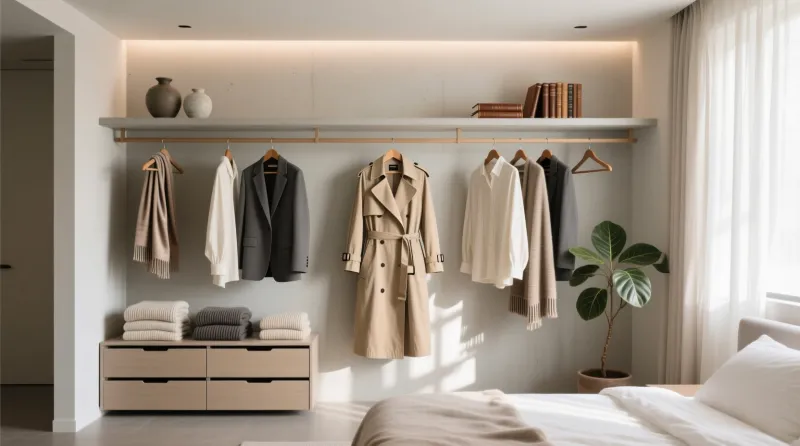
A wardrobe that's evolved well still has a coherent point of view. It just looks a little different than it did a few years ago, and the pieces it's retired were replaced thoughtfully rather than impulsively.
The Signs You Actually Need a Refresh
Not every restless feeling in front of your closet means something needs to change. Sometimes you just need to re-engage with what you already have. But there are real signals worth paying attention to:
Your life has genuinely shifted. A new job, a move, a change in how you spend most of your time — these are legitimate reasons to reassess. A wardrobe built around a commuter lifestyle doesn't serve someone who now works remotely, and vice versa.
Your proportions or fit preferences have changed. Bodies change. So do taste preferences around fit. If you've spent years in slim cuts and you're finding yourself drawn to more relaxed silhouettes, that's worth acknowledging — not resisting.
Your color palette feels dated to you. Not to trends — to you. If you look at your wardrobe and it reads like a chapter of your life you've closed, that's a reasonable cue to slowly introduce something new.
You're buying things that don't connect to what you own. This is one of the clearest signs. If your recent purchases feel orphaned — stylistically or aesthetically disconnected from the rest of your closet — your taste has shifted but your wardrobe hasn't caught up.
How to Update Without Burning It Down
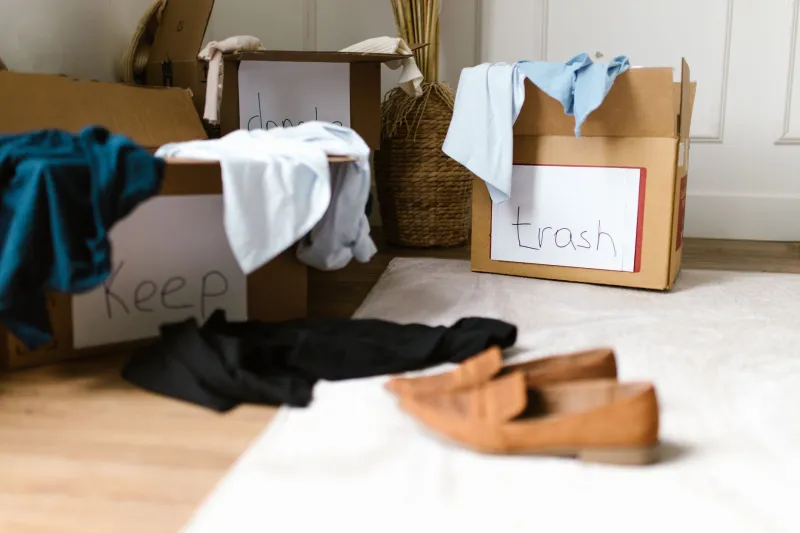
The instinct when something feels off is to start over. Clear everything out, start fresh, buy new things. That approach is expensive, wasteful, and usually results in a slightly different version of the same problem six months later.
A smarter approach is incremental replacement with clear intention.
Start by identifying what's still working. These are the pieces you reach for without thinking — the ones that fit well, feel right, and photograph well in your head before you even put them on. These are your anchors. Don't touch them.
Next, identify what's not working and be honest about why. Is it fit? Is it color? Is it that the piece belongs to an older version of your aesthetic? Understanding the reason matters because it tells you what to look for when you replace it.
Then, replace one category at a time. If your outerwear feels dated, focus there. If your pants situation has gotten out of hand, address that specifically. Trying to refresh everything at once is how you end up with a closet full of new things that still don't work together.
The Investment Argument for Slow Evolution
There's a practical reason to take this approach slowly, and it comes down to protecting the investment you've already made. If you've been intentional about building your wardrobe — buying quality over quantity, choosing pieces that were meant to last — those pieces have real value. Replacing them wholesale because your taste has drifted slightly is a costly overcorrection.
Slow evolution also tends to produce better results aesthetically. When you introduce new pieces gradually, you can see how they interact with what you already own. You can test whether a new direction actually works for you before committing to it fully. That's how a wardrobe develops character over time rather than just cycling through phases.
The goal isn't a static wardrobe. It's a living one — something that reflects who you are right now while honoring the thoughtfulness that got you here. That balance doesn't require a complete restart. It just requires paying attention.
A Note on Trends
This is where intentional dressing and trend culture part ways pretty decisively. Trends are designed to make everything feel dated on a schedule. If you're dressing with intention, your relationship to trends should be selective at most — you adopt what genuinely fits your aesthetic and ignore what doesn't.
The question to ask about any trend isn't "is this having a moment?" It's "does this actually make sense in the context of how I dress?" If the answer is yes, it's worth considering. If the answer is no, the trend isn't a problem. Your clarity is.
Style maturity looks a lot like knowing the difference.