Stuck Between Seasons? Your Wardrobe Doesn't Have to Be
Somewhere around early March and again in late September, a specific kind of frustration sets in. It's 52 degrees in the morning and 71 by afternoon. Your winter coat is too much. Your fall jacket is somewhere. Your summer stuff is packed away — or worse, still out, but clearly wrong. You stand in front of your closet for longer than you should and eventually put on something that's fine, technically, but doesn't feel right all day.
This is the transition problem. And it's more universal than the fashion industry's seasonal rollout schedule would have you believe.
Why the Standard Advice Doesn't Help
Most wardrobe guidance treats seasons as clean handoffs. Summer ends, you pack it away, you bring out fall. Fall ends, winter comes in. And so on. It's tidy. It's also not how weather — or life — actually works in most of the US.
In the South, "fall" might not arrive until November, if at all. In the Pacific Northwest, layers are a year-round project because the temperature can swing 30 degrees in a single day. In the Midwest and Northeast, the gap between seasons is real and extended — weeks where you genuinely don't know what to dress for because the weather doesn't know what it's doing either.
The seasonal swap model also assumes a lifestyle that stays relatively constant across the year, which most people's don't. Your schedule in October probably looks different from your schedule in July — different events, different obligations, different amounts of time spent outside. A wardrobe that doesn't account for that is going to feel off even when the weather cooperates.
The Real Problem: Dressing for Temperature Ranges, Not Temperatures
Here's a reframe that actually helps: stop trying to dress for a specific temperature and start building for a range.
On a 55-degree day with sun, you might be comfortable in a light layer. On a 55-degree day with wind and clouds, you need something more substantial. Same number on the thermometer, different dressing problem. A wardrobe built around single-season pieces isn't equipped for that variability. A wardrobe built around layering and versatile mid-weight pieces is.
The goal isn't to own more — it's to own differently. A few key pieces that operate across a wider temperature range will serve you better in the in-between months than a full seasonal wardrobe on either end.
The Transition Wardrobe: What Actually Works
Instead of thinking about spring and fall as abbreviated versions of the seasons on either side, think of them as their own category with their own requirements. Here's what that looks like in practice:
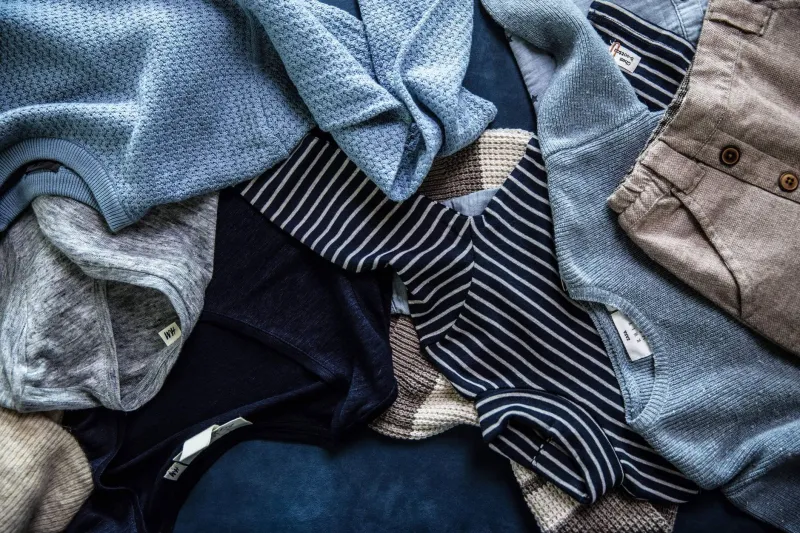
Mid-weight fabrics are your best investment. Heavy wool is too much in October. Linen is not enough. But a medium-weight cotton, a brushed twill, a lightweight fleece, or a French terry — those work across a wider range of conditions. They're not trying to be summer or winter. They're built for the middle, which is where you actually spend a lot of time.
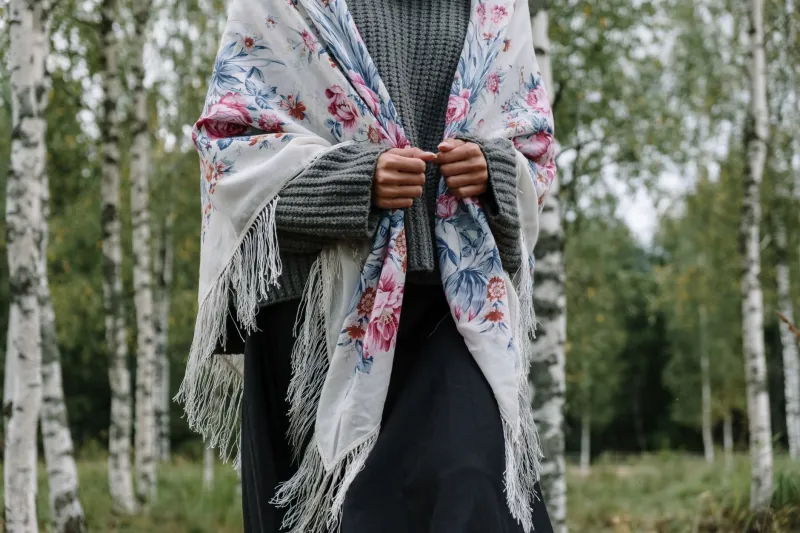
Layering pieces earn their place. A well-chosen overshirt, a zip-up in a neutral color, or a shirt jacket (the kind that works both open over a tee and closed on its own) is worth three single-use pieces. These are the items that make transition dressing feel intentional rather than improvised.
Bottoms matter more than tops in transitions. When temperatures fluctuate, most people instinctively adjust their top layers — add a jacket, lose a sweatshirt. But your pants and jeans are harder to swap mid-day, which means they need to work across a wider comfort range. A slightly heavier-weight denim or a chino that doesn't trap heat is more useful than a summer-weight trouser that leaves you cold every morning.
Footwear is the transition tell. Nothing dates a transitional outfit faster than shoes that belong to the wrong season. A clean leather sneaker, a simple low boot, or a versatile slip-on can bridge the gap in a way that sandals and heavy winter boots can't. Footwear is often the last thing people update, but it's one of the first things that signals whether an outfit is working.
Building a Year-Round Capsule That Actually Covers the Middle
If you want to solve the transition problem permanently rather than seasonally, the answer is a capsule that's weighted toward the middle rather than the extremes.
That means fewer pieces that only work in peak summer or peak winter, and more pieces that are functional from roughly 45 to 70 degrees — which, if you think about it, covers a significant portion of the year in most US climates.
A practical starting point:
- Two to three mid-weight bottoms that work in both cool and mild temperatures
- A handful of tops in fabrics that layer without bulk — lightweight long sleeves, slightly heavier short sleeves
- Two layering pieces at different weights (one lighter, one more substantial)
- One reliable outer layer that handles wind and light cold without being a full winter coat
- Footwear that bridges seasons — something you can wear in September and again in April without it looking like a stretch
This isn't a complete wardrobe. It's a foundation that makes the in-between months feel less like a problem to solve and more like a range you're already dressed for.
Stop Treating Transition as a Temporary State
The bigger shift is conceptual. For a lot of people, spring and fall feel like holding patterns — you're just waiting for the weather to commit so you can dress properly. That mindset guarantees that those months will always feel like a wardrobe struggle.
But spring and fall aren't interruptions. In most of the country, they're collectively four to five months of the year. That's nearly half your life spent in the in-between. Dressing for it well isn't a compromise. It's just accurate.
The pieces that carry you through those months — the ones that handle the 7 AM chill and the 3 PM warmth without requiring a full outfit change — are some of the hardest-working items you can own. They deserve more thought than they typically get.
Wear less. Mean more. Even when the weather can't make up its mind.